Cow Dung Cakes
1 kg pack (28 Pieces)
₹249.00₹229.00
Pure Cow Dung Cakes Online
Finding genuine Cow Dung Cakes online is honestly harder than most people expect.
Many buyers order once and then realise the cakes either have too much smoke or they simply refuse to burn properly. Sometimes the problem is moisture. Sometimes the cakes are mixed with straw, mud or other filler just to increase weight. From outside they look fine, but when you light them during pooja or havan the smell feels strange and the smoke becomes uncomfortable inside the house.
Another common issue people talk about is half dried Cow Dung Cakes. These might look dry but inside they still hold moisture. So the flame keeps dying and the cake slowly turns black instead of burning evenly.
Some buyers also receive very thin machine pressed cakes that burn too fast. For havan or slow pooja rituals that becomes frustrating.
Because of all this, many people now look carefully before buying Cow Dung Cakes online. They check whether the cakes are village made, properly sun dried, and actually sourced from gaushalas instead of factory style production.
It may sound like a simple product, but good Cow Dung Cakes are surprisingly difficult to find if the source is not reliable.
How These Cow Dung Cakes Are Made and Sourced From Village Gaushalas
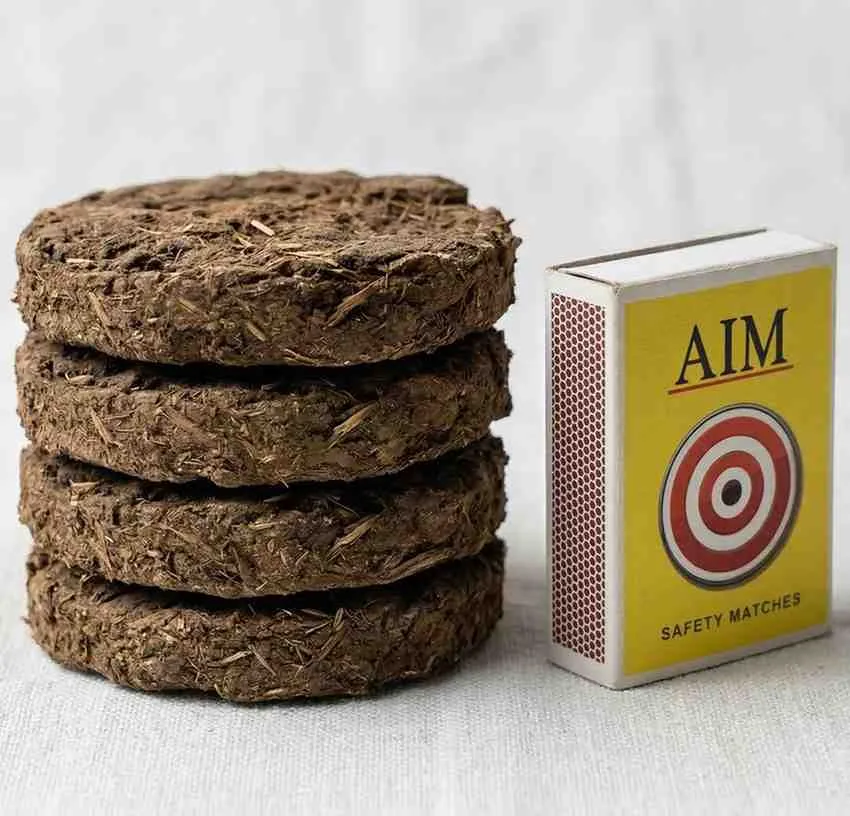
These Cow Dung Cakes come from small village gaushalas where cows are raised in a traditional way. The dung is collected fresh in the morning and shaped by hand the same way it has been done in villages for generations.
Women from local self help groups usually handle this work. They shape each Cow Dung Cake by hand and leave them for sun drying in open fields or courtyard spaces. No machines involved.
Personally, I still prefer handmade Cow Dung Cakes over machine pressed ones. Handmade cakes usually burn more steadily. Machine ones sometimes feel too compact.
Drying is a slow process. Under strong sun the cakes normally take a few days to fully dry. But during monsoon or winter the drying time increases. Moisture in air changes everything.
So the final texture of Cow Dung Cakes can vary slightly depending on season. Some buyers notice this difference, some do not.
The dung itself comes from desi cows in village gaushalas where animals are mostly grass fed. That naturally affects smell and burning quality as well.
One small thing people notice when they open the parcel is the natural earthy smell of Cow Dung Cakes. It is not a chemical smell. More like dried soil after rain.
Some people like it. Some people take a few minutes to get used to it.
Burning Quality, Smell and Ash of These Cow Dung Cakes
When properly dried, Cow Dung Cakes burn slowly with a steady flame. They do not flare up like wood pieces. The burn stays controlled which is why they are widely used for havan and daily pooja.
A single Cow Dung Cake usually burns for a decent amount of time depending on thickness. Handmade cakes sometimes burn longer because they are not tightly compressed.
The smoke is usually mild and earthy. It does not have that sharp chemical smell which people complain about with poor quality Cow Dung Cakes. In open spaces the smoke actually feels quite traditional, something many people associate with village kitchens or temple havans.
Ash produced after burning Cow Dung Cakes is surprisingly fine. Many farmers and home gardeners collect this ash and mix it into soil because it contains natural minerals.
Even in pooja rituals, some people prefer the ash from Cow Dung Cakes because it feels more natural compared to charcoal or synthetic fuel.
That said, burning behaviour can change slightly if the cakes absorb moisture during storage.
If stored in a damp place, Cow Dung Cakes might take longer to ignite or produce a little extra smoke.
So dry storage always helps. And honestly with natural products like these, small variations are normal. Some buyers even say they prefer slightly thicker Cow Dung Cakes because they burn longer for havan.
But it really depends on personal preference.
Practical Benefits of Using Cow Dung Cakes at Home or Farm
Many people buy Cow Dung Cakes mainly for pooja or havan, but their use actually goes much beyond that. In villages this has always been a daily household fuel. Only now people in cities are slowly remembering these traditional uses again.
One simple benefit of Cow Dung Cakes is slow and steady burning. They do not burn aggressively like dry wood pieces. Because of that, they are easier to control during havan rituals where the fire should stay stable and not jump around.
Another thing people notice is the natural smell when Cow Dung Cakes burn. It feels earthy, almost like dried soil heating up. Many families prefer this during religious rituals because it feels more traditional compared to chemical based fire starters.
Farmers also use the ash left after burning Cow Dung Cakes. The ash contains minerals that can be mixed into soil around plants. Some gardeners sprinkle a little ash near vegetable beds or flower pots. It is not some magical fertiliser, but it does add something useful to the soil.
In rural kitchens, Cow Dung Cakes are still used in chulhas because they burn longer and give consistent heat for slow cooking. Rotis, tea, or even dal cooking on a chulha using Cow Dung Cakes has a slightly different taste. Hard to explain exactly why.
Another small use people mention is evening smoke. When one or two Cow Dung Cakes are burned outside the house courtyard, the smoke sometimes helps reduce mosquitoes. Some families do this regularly during monsoon evenings.
Of course the usefulness of Cow Dung Cakes depends on quality and dryness. If the cakes have absorbed moisture during transport or storage, burning may become a bit slower.
Natural products behave like that sometimes.
Common Ways People Use Cow Dung Cakes for Pooja, Havan and Chulha
For pooja and havan, people usually start by breaking one Cow Dung Cake into two or three pieces. Smaller pieces catch fire faster. Once the first piece starts burning properly, ghee, camphor or havan samagri can be added.
Some people prefer placing two Cow Dung Cakes slightly tilted against each other so air can pass between them. That small gap actually helps the flame stay alive longer during havan.
In temples and homes where daily agnihotra or havan happens, Cow Dung Cakes are almost the default fuel. They produce steady heat and allow the ritual to continue without constant adjustment.
For village style cooking, Cow Dung Cakes are stacked inside a clay or brick chulha. Usually two or three cakes are enough to start the fire. Once the flame stabilises, additional cakes can be added slowly depending on how long cooking needs to continue.
Tea preparation on a chulha using Cow Dung Cakes is still common in many villages. The heat builds gradually, which suits boiling milk slowly.
Some households also use Cow Dung Cakes while making gobar diyas during festivals. The dried dung can be crushed slightly and reshaped if needed.
One thing though.
If the cakes arrive slightly soft because of weather or delivery conditions, it is better to leave the Cow Dung Cakes in sunlight for a few hours before using them.
Just makes ignition easier.
Packaging, Storage and Delivery Reality of Cow Dung Cakes
Aspect | What Buyers Should Know |
Packaging Method | These Cow Dung Cakes are usually packed in thick poly wrap or cardboard boxes to keep them together during transport. Since they are a natural product, perfect factory style packing is not always possible. |
Possible Breakage | Some Cow Dung Cakes may arrive broken or chipped. This is quite normal because they are dry and slightly fragile. Even broken pieces can still be used easily for havan or chulha. |
Dust Inside Package | When the parcel is opened, a little dry dust from the Cow Dung Cakes may be visible. This happens during travel when cakes rub against each other inside the box. |
Natural Smell on Arrival | The package may carry a strong earthy smell of Cow Dung Cakes when opened. It usually reduces after keeping the cakes in open air for some time. |
Weather and Moisture Effect | During monsoon or humid weather, Cow Dung Cakes can absorb slight moisture during transport. If this happens, placing them in sunlight for a few hours normally fixes the issue. |
Storage at Home | Store Cow Dung Cakes in a dry place with airflow. Avoid keeping them directly on the floor where dampness can reach them. |
Long Term Storage Tip | If planning to store Cow Dung Cakes for many weeks, keep them in a ventilated basket or cloth bag. Airtight plastic sometimes traps moisture. |
Frequently Asked Questions About Cow Dung Cakes
Do these Cow Dung Cakes produce too much smoke during pooja or havan?
If the Cow Dung Cakes are properly dried, the smoke is usually mild and earthy. It is not like burning wet wood. Still, the amount of smoke can change a little depending on moisture in the cakes or airflow in the room.
How many Cow Dung Cakes are usually needed for one havan?
For a small home havan, people often use two to four Cow Dung Cakes to start the fire. After that, small pieces can be added slowly as needed. Some families prefer breaking one cake into pieces instead of using many full cakes.
Can these Cow Dung Cakes be used for chulha cooking?
Yes, many people still use Cow Dung Cakes for traditional chulha cooking. They burn slowly and give steady heat. Usually two or three cakes are enough to start a cooking fire, then more can be added depending on how long the cooking takes.
What should be done if the Cow Dung Cakes feel slightly soft after delivery?
This sometimes happens during humid weather or long travel. Just place the Cow Dung Cakes in sunlight for a few hours. They normally become dry and ready to burn again.
Is it normal if some Cow Dung Cakes arrive broken?
Yes, small breakage is quite common because Cow Dung Cakes are dry and fragile. Even broken pieces work perfectly for havan, mosquito smoke or chulha use.
How long can Cow Dung Cakes be stored?
If stored in a dry place with airflow, Cow Dung Cakes can last for many months. Moisture is the main thing to avoid. Some buyers keep them in baskets or cloth bags rather than sealed plastic.
Do Cow Dung Cakes leave useful ash after burning?
Yes, the ash from Cow Dung Cakes is often collected and used in small home gardens or farms. It contains natural minerals, so some people mix it with soil around plants. It is a small traditional practice still followed in many villages.
Product Detail | Information |
Product Name | Cow Dung Cakes |
Price | ₹229.00 |
Pack Size | 1 kg pack |
Approx Pieces | Around 28 pieces per pack |
Type | Natural dried Cow Dung Cakes |
Making Method | Hand shaped and sun dried in village environment |
Source | Collected from local gaushala cows |
Burning Quality | Slow burning with steady flame suitable for pooja and havan |
Smell | Natural earthy smell of dried dung |
Ash After Burning | Fine natural ash often used in gardens or farming |
Common Uses | Pooja, havan, agnihotra, chulha cooking, mosquito smoke, gobar diya making |
Storage Advice | Keep in a dry place with airflow to avoid moisture |
Delivery Condition | Slight breakage or dust may happen during transport since cakes are dry and fragile |
Best For | Daily pooja, havan rituals, village style cooking, organic farming practices |